Lab-Grown vs Natural Diamonds: The Complete Guide for Engagement Ring Buyers in 2025
This Diamond Secret Could Save You Thousands (Natural vs Lab-Grown)
When the moment comes to choose an engagement ring, couples today face a decision their grandparents never considered: lab-grown or natural diamonds? This choice goes far beyond aesthetics—it touches on budget, values, environmental impact, and what a symbol of forever truly means. With lab-grown diamonds now accounting for nearly 20% of the global diamond market, understanding the differences has never been more critical for making an informed decision that aligns with both your heart and your principles.
Key Takeaways
- Appearance: Lab-grown and natural diamonds are chemically identical and indistinguishable to the naked eye, requiring specialized equipment to tell them apart
- Price: Lab-grown diamonds cost 60-80% less than natural diamonds of comparable quality, allowing couples to maximize size and quality within their budget
- Durability: Both types score 10 on the Mohs hardness scale and offer identical longevity, brilliance, and resistance to scratching
- Ethics: Lab-grown diamonds eliminate concerns about mining practices while offering complete transparency in sourcing and production
- Value: Natural diamonds hold resale value better, while lab-grown diamonds provide superior upfront value for those prioritizing the ring itself over investment potential
Understanding the Fundamentals: What Makes a Diamond
Before diving into comparisons, it’s essential to understand what diamonds actually are. Both natural and lab-grown diamonds consist of pure carbon atoms arranged in a crystalline structure. This identical chemical composition (C) means they share the same physical, optical, and chemical properties.
Natural diamonds form deep within the Earth’s mantle over billions of years under extreme heat and pressure. Lab-grown diamonds replicate this process in controlled environments using two primary methods:
- HPHT (High Pressure High Temperature): Mimics natural geological conditions
- CVD (Chemical Vapor Deposition): Grows diamonds from carbon-rich gas
The result? Stones that are scientifically, physically, and visually identical to their mined counterparts.
Both types exhibit:
- Identical brilliance and fire (light dispersion)
- The same refractive index (2.42)
- Equivalent clarity characteristics
- Matching color grading scales (D-Z)
The only way to definitively identify a lab-grown diamond is through advanced gemological testing that detects microscopic growth patterns or trace elements. Major certification bodies like GIA and IGI now grade both types using identical standards.
Quality Variations
Both natural and lab-grown diamonds come in the full spectrum of quality grades. You can find:
✨ Flawless, colorless stones in both categories
💎 Included, tinted specimens in both categories
🔍 Unique inclusions and characteristics in both types
The key difference? Lab-grown diamonds often achieve higher average quality because the controlled environment minimizes impurities. This means you’re more likely to find eye-clean, near-colorless lab-grown diamonds at accessible price points.
Price: Where the Difference Becomes Clear
The Cost Breakdown
This is where lab-grown and natural diamonds diverge dramatically. The price comparison reveals the most significant practical difference for couples planning their engagement:
| Diamond Type | 1-Carat Round, Excellent Cut, VS1, F Color |
|---|---|
| Natural Diamond | $8,000 – $12,000 |
| Lab-Grown Diamond | $1,600 – $3,000 |
| Savings | 60-80% |
These numbers represent real-world pricing as of 2025, reflecting the continued maturation of lab-grown diamond production technology.
What Your Budget Actually Buys
The price advantage of lab-grown diamonds creates compelling opportunities:
Option 1: Upgrade Size
For the same budget, couples can choose a significantly larger lab-grown diamond. A budget of $5,000 might purchase:
- A 0.75-carat natural diamond
- A 2-carat lab-grown diamond of comparable quality
Option 2: Upgrade Quality
Alternatively, maintain the desired size while upgrading to higher color and clarity grades, resulting in a more brilliant, eye-clean stone.
Option 3: Enhanced Setting
Invest savings into a more elaborate setting, custom design work, or additional lab-grown diamond wedding jewelry to complete the bridal set.
Long-Term Value Considerations
Natural diamonds have historically maintained better resale value, though most couples never sell their engagement rings. Lab-grown diamonds depreciate more significantly, similar to purchasing a new car. However, if the ring’s purpose is symbolic rather than investment-oriented, this distinction may be irrelevant to your decision.
Durability: Built to Last Forever
Hardness and Wearability
Both diamond types score 10 on the Mohs hardness scale—the hardest naturally occurring substance. This means:
- Equal resistance to scratching
- Identical durability for daily wear
- Same longevity across generations
- Equivalent maintenance requirements
Whether lab-grown or natural, a properly cared-for diamond will look as brilliant in 50 years as it does today.
Structural Integrity
The crystalline structure of both types ensures:
🛡️ Chip resistance (though both can chip if struck at specific angles)
💪 Heat tolerance up to 1,292°F before damage
✨ Permanent brilliance that doesn’t fade or dull over time
Care and Maintenance
Caring for lab-grown diamond engagement rings requires the same approach as natural diamonds:
- Regular cleaning with mild soap and warm water
- Professional inspections annually to check prong security
- Ultrasonic cleaning is safe for both types
- Avoid harsh chemicals that could damage metal settings
The durability comparison is truly a tie—both options will endure as lasting symbols of commitment.
Ethical Implications: The Conscious Choice
Environmental Impact
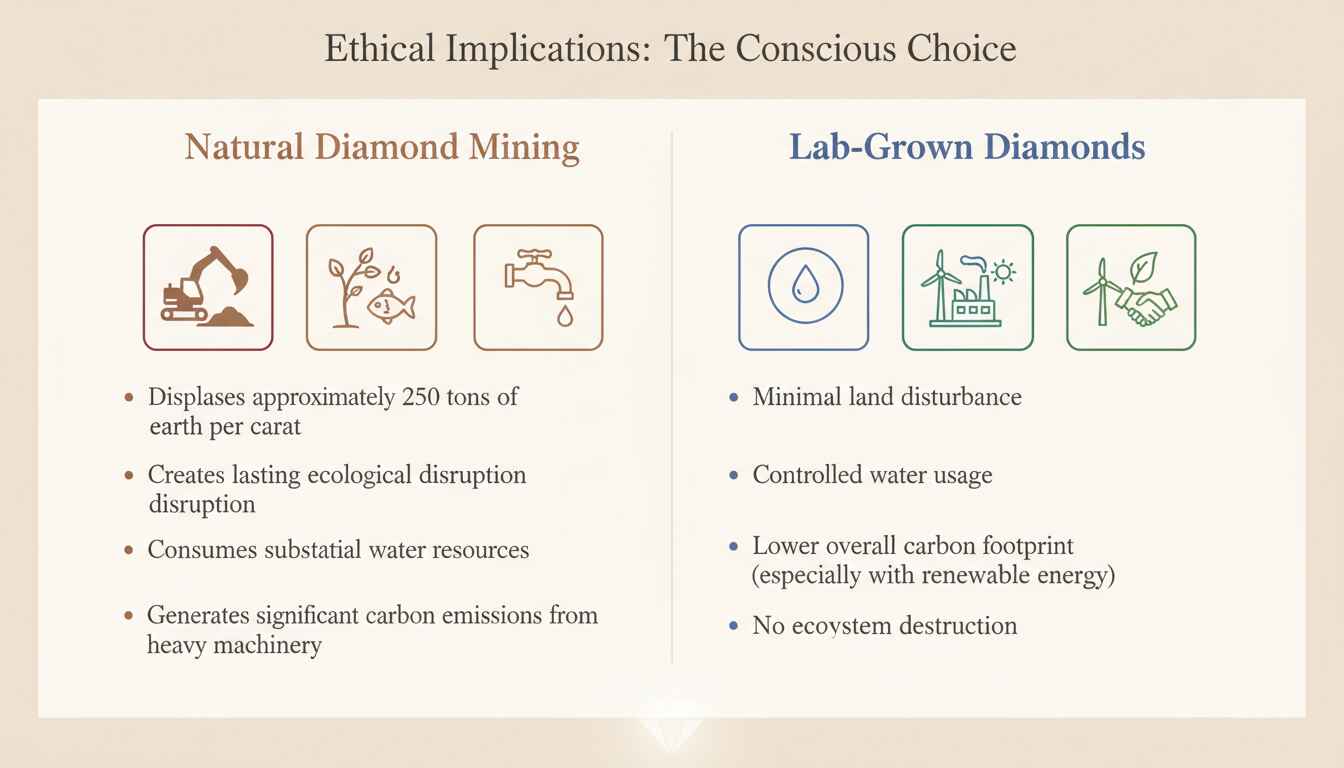
The environmental comparison reveals significant differences:
Natural Diamond Mining:
- Displaces approximately 250 tons of earth per carat
- Creates lasting ecological disruption
- Consumes substantial water resources
- Generates significant carbon emissions from heavy machinery
Lab-Grown Diamonds:
- Minimal land disturbance
- Controlled water usage
- Lower overall carbon footprint (especially with renewable energy)
- No ecosystem destruction
For couples prioritizing eco-friendly lab-grown diamonds, the environmental advantages are compelling. However, it’s worth noting that lab-grown production does require significant energy—choosing producers who use renewable energy maximizes environmental benefits.
Social and Labor Considerations
The human element of diamond sourcing carries weight:
Natural Diamonds:
- Concerns about worker conditions in some mining regions
- Historical issues with conflict diamonds (though Kimberley Process has improved this)
- Economic benefits for mining communities
- Employment for millions globally
Lab-Grown Diamonds:
- Controlled, regulated working environments
- Complete supply chain transparency
- No risk of funding conflict
- Fewer jobs created per carat produced
For many couples, choosing ethical lab diamonds provides peace of mind that their symbol of love doesn’t carry hidden costs.
Transparency and Traceability
Lab-grown diamonds offer complete origin transparency. Buyers know exactly where, when, and how their diamond was created. Natural diamonds, despite certification improvements, sometimes have complex supply chains that make origin verification challenging.
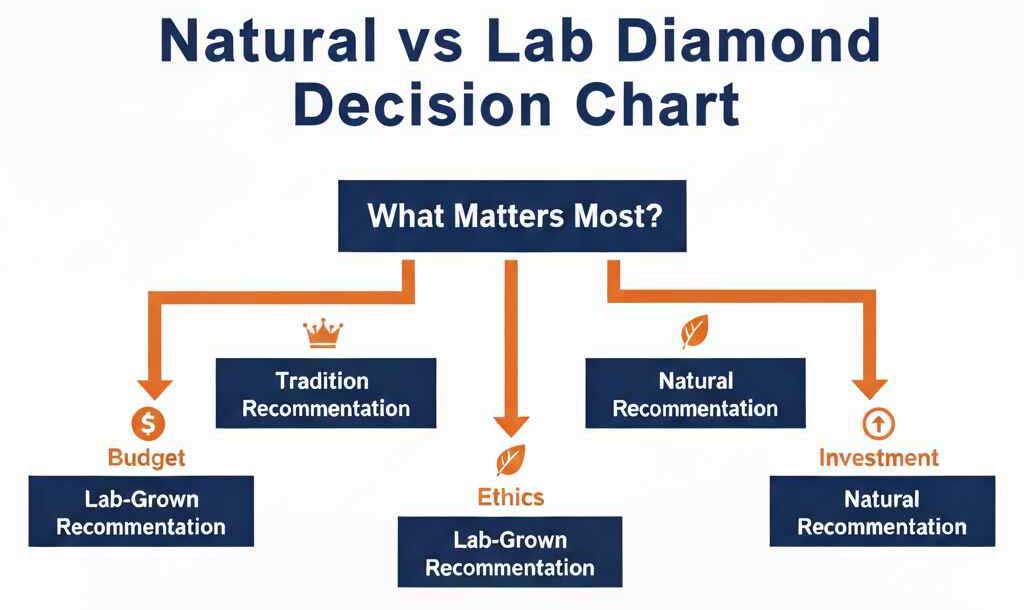
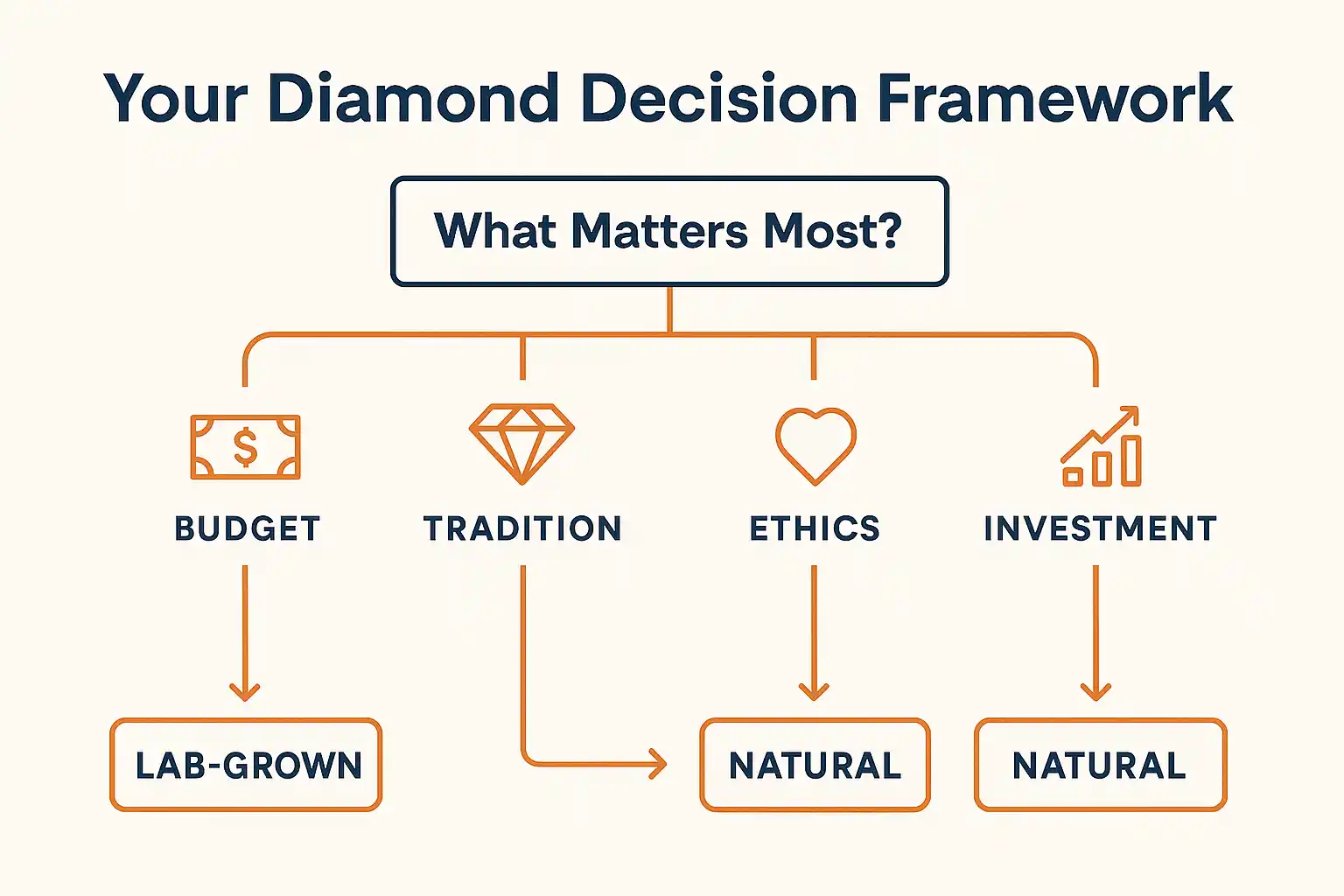
Making Your Decision: Which Diamond Is Right for You?
Choose a Natural Diamond If:
- You value traditional rarity and geological history
- Resale value and investment potential matter to you
- You appreciate the romance of a billions-year-old stone
- You have budget flexibility and prefer the established market
- Family tradition or personal values favor natural stones
Choose a Lab-Grown Diamond If:
- Budget optimization is a priority
- Environmental and ethical considerations are paramount
- You want maximum size and quality for your investment
- You appreciate modern technology and innovation
- You value transparency in sourcing
The Hybrid Approach
Some couples choose strategically: a larger lab-grown center stone with natural diamond accents, or vice versa. This approach balances priorities while creating a unique piece.
When you’re ready to explore options, learning how to buy lab-grown diamonds online can help you navigate the purchasing process with confidence.
Certification and Quality Assurance
Regardless of your choice, always purchase certified diamonds. Reputable grading laboratories include:
- GIA (Gemological Institute of America): The gold standard, grades both types
- IGI (International Gemological Institute): Specializes in lab-grown certification
- AGS (American Gem Society): Known for strict cut grading
Certification ensures you receive exactly what you’re paying for, with documented proof of quality characteristics.
Real Couples, Real Stories
The decision between lab-grown and natural diamonds is deeply personal. Some couples discover that a dream ring came to life through the affordability of lab-grown options, allowing them to create custom designs previously beyond their budget.
Others find that the symbolism of a natural diamond—formed over billions of years—resonates with their vision of eternal commitment. Neither choice is wrong; both are valid expressions of love and values.
The Future of Diamonds in 2025 and Beyond
The diamond industry continues evolving rapidly. Lab-grown technology improves yearly, with prices declining while quality increases. Meanwhile, natural diamond producers emphasize sustainability initiatives and ethical sourcing improvements.
For couples making decisions in 2025, the good news is this: you have more options, better information, and greater transparency than ever before. Whether you choose lab-grown or natural, you can make an informed decision aligned with your values, budget, and vision for your future together.
Conclusion: Your Perfect Diamond Awaits
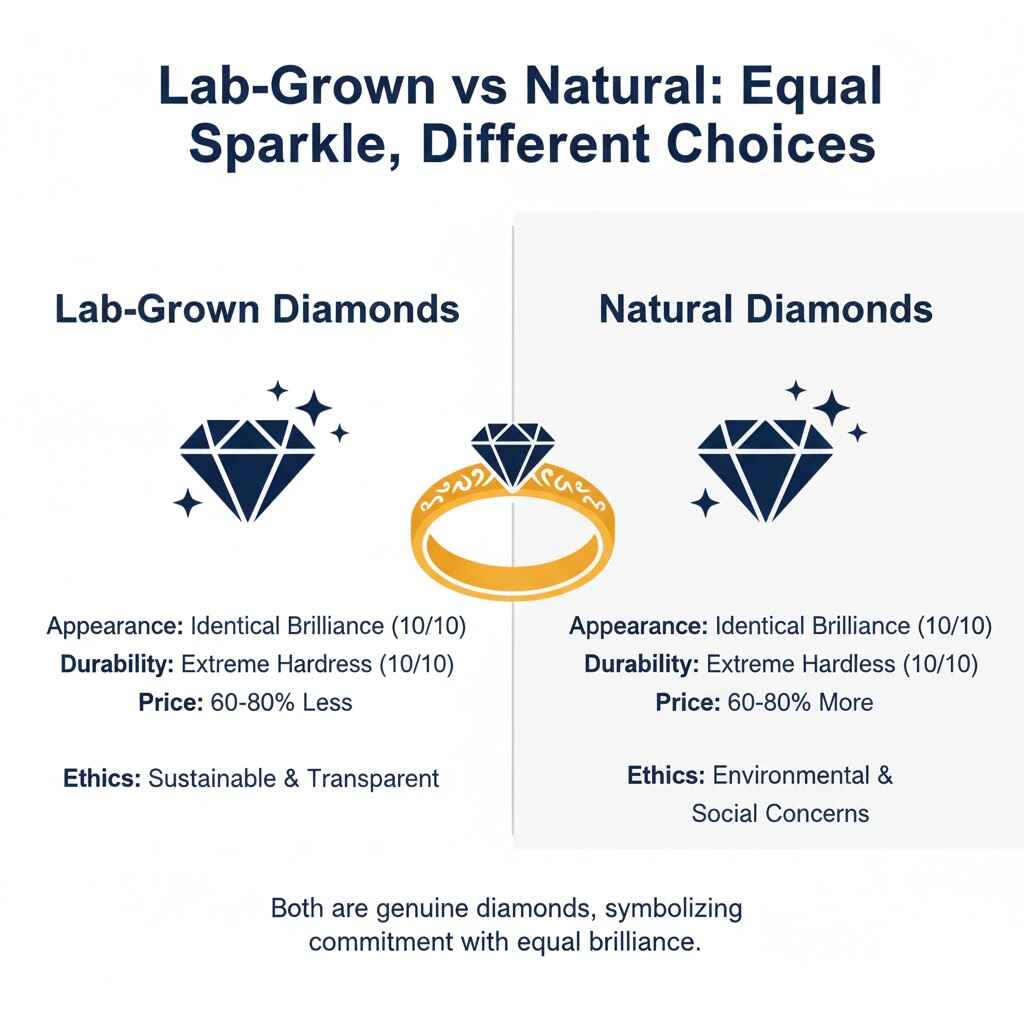
The comparison between lab-grown and natural diamonds reveals more similarities than differences in appearance and durability, with significant distinctions in price and ethical implications. Both options offer genuine diamonds that will last a lifetime, symbolizing commitment with equal brilliance.
Your next steps:
- Define your priorities: Rank what matters most—budget, ethics, tradition, or size
- Set a realistic budget: Determine what you’re comfortable investing in this symbol
- Research reputable sellers: Focus on certified diamonds from established jewelers
- Compare certified stones: Examine grading reports for both natural and lab-grown options
- Trust your instincts: Choose the diamond that feels right for your unique love story
The perfect engagement ring isn’t determined by its origin—it’s defined by the love it represents and the thoughtfulness behind its selection. Whether you choose a diamond formed billions of years ago deep in the Earth or one created through human innovation in recent weeks, you’re selecting a lasting symbol of commitment that will shine brilliantly for generations to come.
The decision is yours, and now you have the knowledge to make it confidently – contact us. 💍✨