Are Lab-Grown Diamonds Worth the Investment in 2026?
Picture this: you’re standing at the crossroads of tradition and innovation, holding a sparkling diamond that’s chemically identical to one formed deep beneath the earth’s surface, but it was created in a lab in just a few weeks. The question burning in your mind? Is this a smart investment, or just a beautiful purchase? As lab-grown diamonds flood the market and reshape the jewelry industry, understanding their investment potential has never been more critical for consumers and entrepreneurs alike.
Key Takeaways
💎 Lab-grown diamonds are not traditional investments – they depreciate quickly and lack the resale value of natural diamonds
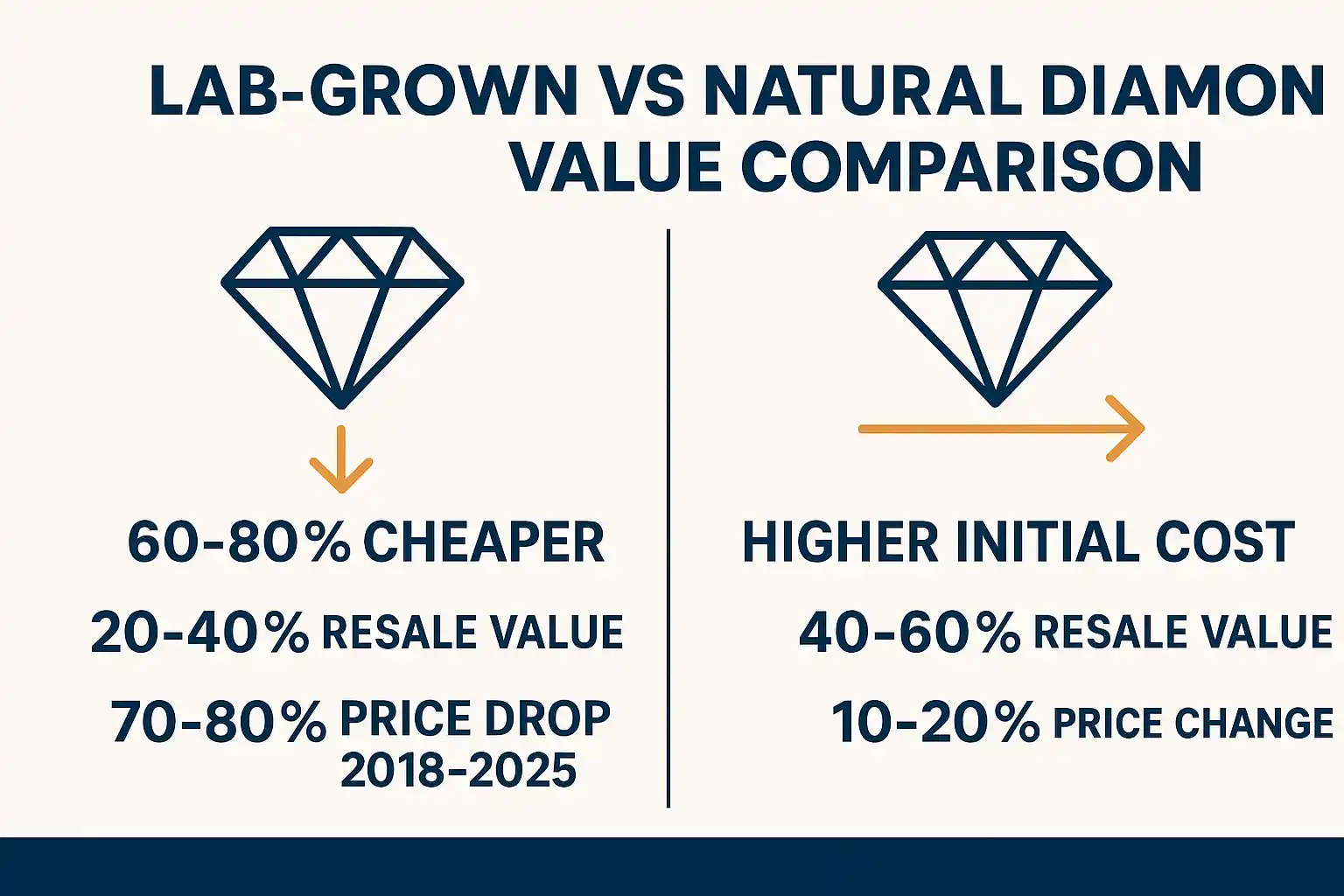
📉 Resale value concerns – lab-grown diamonds typically retain only 20-40% of their original purchase price
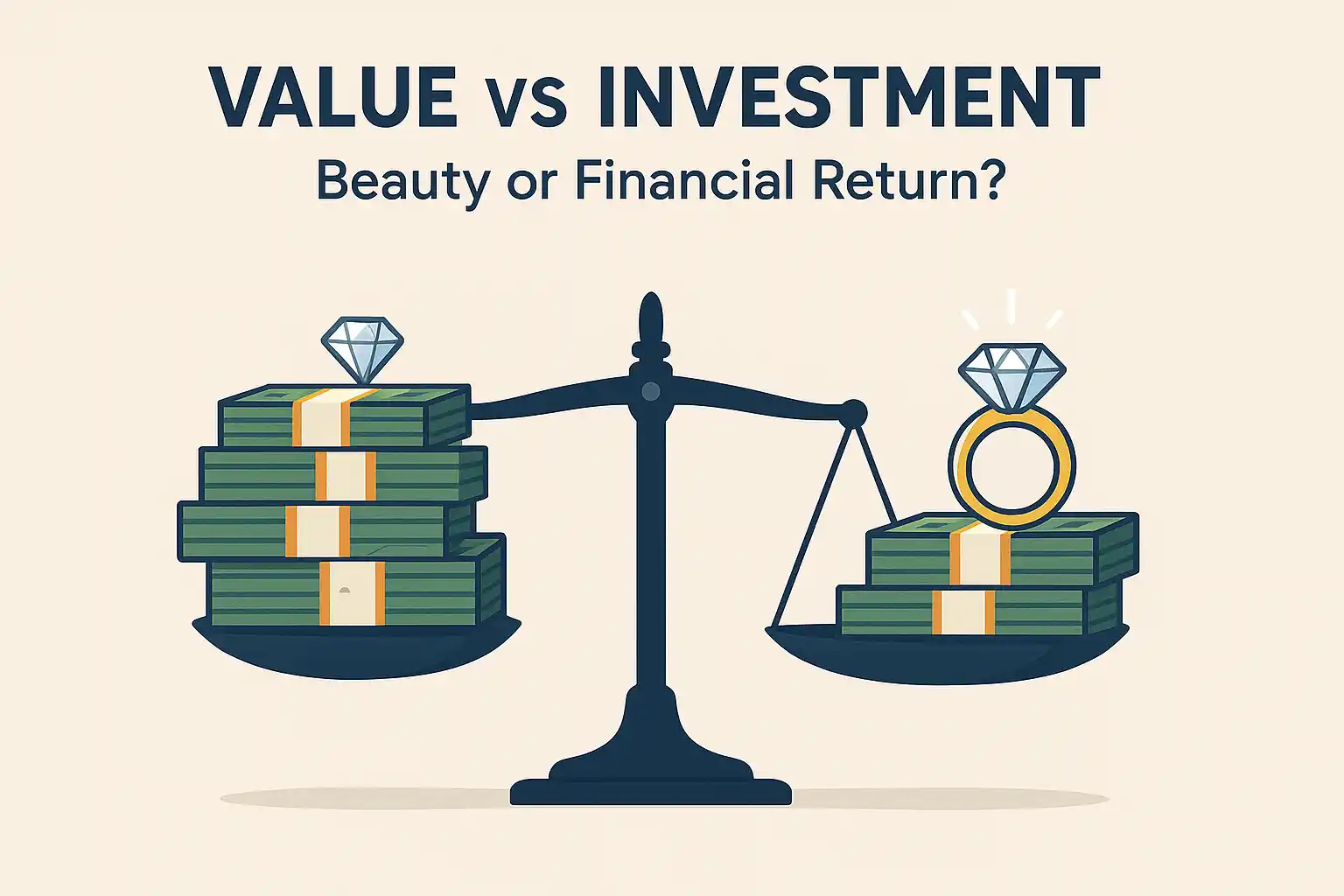
✨ Purchase for beauty, not profit – these diamonds excel as affordable luxury items rather than financial assets
💰 Price advantage for consumers – 60-80% cheaper than natural diamonds with identical physical properties
🔮 Future value uncertainty – market saturation and technological improvements continue to drive prices down
Understanding Lab-Grown Diamond Investment
The conversation around lab-grown diamond investment has shifted dramatically over the past few years. While these scientifically-created gems offer stunning beauty and ethical appeal, their financial performance tells a different story than traditional gemstone investments.
Lab-grown diamonds, also called synthetic, cultured, or man-made diamonds—are created using advanced technological processes that replicate the natural conditions under which diamonds form. The two primary methods are High Pressure High Temperature (HPHT) and Chemical Vapor Deposition (CVD). The result? Stones that are physically, chemically, and optically identical to mined diamonds.
The Investment Reality Check
Here’s the uncomfortable truth that many retailers won’t share upfront: lab-grown diamonds should not be purchased as investments. Unlike gold, rare colored diamonds, or certain precious gemstones that have historically appreciated or maintained value, lab-grown diamonds behave more like consumer electronics—depreciating rapidly as technology improves and production scales up.
Think of it this way: would you buy a smartphone expecting it to increase in value? Probably not. The same principle applies to lab-grown diamonds in 2025.
Are Lab-Grown Diamonds a Good Investment?
The short answer is no, lab-grown diamonds are generally not a good investment from a financial perspective. Let’s break down why:
Rapid Price Depreciation
Between 2018 and 2025, lab-grown diamond prices have plummeted by approximately 70-80% for most sizes and qualities. A one-carat lab-grown diamond that cost $4,000 in 2018 might sell for under $800 today. This trend shows no signs of reversing.
Key factors driving depreciation:
- 🏭 Increased production capacity – more manufacturers entering the market
- 🔬 Technological improvements – faster, more efficient growing processes
- 📊 Market saturation – supply far exceeding demand growth
- 💡 Consumer education – buyers understanding the abundance of supply
The Supply Equation
Unlike natural diamonds, which took billions of years to form and exist in finite quantities, lab-grown diamonds can be produced continuously. As long as there’s electricity and carbon, manufacturers can create more diamonds. This unlimited supply fundamentally undermines investment potential.
“The value of any asset is intrinsically tied to scarcity. Lab-grown diamonds, by their very nature, cannot be scarce.” – Gemological Institute of America”
Comparing Investment Potential
Lab-Grown Diamonds
| Scarcity | Unlimited |
| Price Trend (2018-2025) | ↓ 70-80% |
| Resale Market | Weak |
| Investment Grade | ❌ No |
Natural Diamonds
| Scarcity | Limited |
| Price Trend (2018-2025) | ↓ 10-20% |
| Resale Market | Moderate |
| Investment Grade | ⚠️ Selective |
Rare Colored Diamonds
| Scarcity | Extremely Limited |
| Price Trend (2018-2025) | ↑ 25-40% |
| Resale Market | Strong |
| Investment Grade | ✅ Yes |
If you’re exploring opportunities in the diamond market and want to buy a diamond ring, check out our shop to see how we position lab-grown diamonds as affordable luxury rather than investment pieces.
Lab-Grown vs Natural Diamond Value
The value proposition between lab-grown and natural diamonds differs significantly, and understanding this distinction is essential whether you’re a consumer or considering starting an eCommerce venture in this space.
Initial Purchase Price
Lab-grown diamonds offer substantial savings:
- 💵 60-80% less expensive than comparable natural diamonds
- 📏 Larger stones for the same budget
- 💍 More elaborate settings possible with savings
For example, a 2-carat, VS1 clarity, F color lab-grown diamond might cost $2,500, while a natural diamond with identical specifications could run $15,000-$20,000.
Long-Term Value Retention
This is where the comparison becomes less favorable for lab-grown options:
Natural diamonds typically retain 40-60% of their retail value when resold through secondary markets. Some rare specimens actually appreciate over time.
Lab-grown diamonds typically retain only 20-40% of their purchase price, and often much less. In many cases, jewelers won’t buy them back at all.
The Perception Factor
Value isn’t purely mathematical—it’s also psychological. Natural diamonds carry:
- ⏰ Billions of years of history embedded in their formation
- 🌍 Geographic uniqueness – each stone has a specific origin
- 💝 Emotional significance – the “forever” narrative
- 👑 Cultural cachet – centuries of association with luxury and commitment
Lab-grown diamonds, despite being identical in composition, lack these intangible qualities that influence perceived value. For entrepreneurs, this means your marketing must focus on different value propositions: sustainability, affordability, and ethical sourcing rather than rarity or investment potential.
Resale Value of Lab-Grown Diamonds
Let’s talk about what happens when you need or want to sell a lab-grown diamond—whether you’re a consumer looking to upgrade or a business managing inventory.
The Secondary Market Challenge
The resale market for lab-grown diamonds is extremely limited compared to natural stones. Here’s what to expect:
Typical resale scenarios:
- Jewelry stores – Most traditional jewelers won’t buy back lab-grown diamonds or offer only 10-20% of the original purchase price
- Online marketplaces – Limited demand and heavy competition from new inventory at lower prices
- Pawn shops – Minimal offers, often based solely on the metal value of the setting
- Private sales – Difficult to establish trust and verify authenticity
Why Resale Value Is So Low
Several factors contribute to poor resale performance:
🔻 Continuous price erosion – why buy used when new is cheaper?
🔻 Lack of certification prestige – lab-grown certification doesn’t carry the same weight
🔻 Retailer reluctance – stores prefer selling new inventory with higher margins
🔻 Consumer preference – buyers typically want new lab-grown diamonds at current market prices
Real-World Resale Examples
Consider these scenarios from 2025:
- A lab-grown diamond engagement ring purchased for $3,000 in 2022 might resell for $600-$900 today
- A 1.5-carat lab-grown diamond bought for $1,800 could fetch only $300-$500 on the secondary market
- Some lab-grown diamonds have zero resale value beyond their setting’s metal worth
For those building an eCommerce business around lab-grown diamonds, transparency about resale limitations builds trust. Learn more about establishing credibility in our blog where we discuss honest marketing practices.
Future Value of Lab-Grown Diamonds
Predicting the future value of any commodity involves uncertainty, but several clear trends suggest lab-grown diamond prices will continue their downward trajectory.
Technology Advancement
Diamond-growing technology improves every year, making production:
- ⚡ Faster – reducing time from weeks to days
- 💰 Cheaper – lowering production costs by 15-20% annually
- 🎯 More precise – creating higher quality stones consistently
- 📈 More scalable – larger facilities with greater output
As production costs decrease, retail prices follow. This creates a deflationary spiral that’s incompatible with investment value.
Market Expansion and Competition
The lab-grown diamond industry is experiencing explosive growth:
- 🌏 New manufacturers in China, India, and Singapore
- 🏢 Traditional diamond companies entering the lab-grown space
- 💻 Direct-to-consumer brands bypassing traditional retail markups
- 🛒 Major retailers like Pandora and Signet committing to lab-grown lines
More competition means downward price pressure and further erosion of resale value.
Changing Consumer Attitudes
Interestingly, consumer perception is shifting in ways that both help and hurt value:
Positive shifts:
- Greater acceptance of lab-grown diamonds as “real” diamonds
- Increased environmental consciousness favoring sustainable options
- Younger consumers prioritizing value over traditional status symbols
Negative implications for value:
- Reduced mystique and exclusivity
- Commodity mindset rather than precious gemstone perception
- Expectation of continuous price decreases (creating purchase hesitation)
Expert Predictions for 2025-2030
Industry analysts forecast:
📉 Continued price declines of 10-15% annually for the next 3-5 years
📊 Market stabilization around 2028-2030 when production costs bottom out
🔄 Differentiation strategies with premium lab-grown brands attempting to create value through design and branding
💎 Specialty applications where lab-grown diamonds maintain value (industrial, technology sectors)
The consensus? Lab-grown diamonds will become increasingly affordable but will never function as traditional investments.
Financial Considerations for Buyers and Sellers
Whether you’re purchasing a lab-grown diamond for personal use or considering them for your eCommerce business, understanding the financial landscape is crucial.
For Personal Buyers
When lab-grown diamonds make sense:
✅ You want maximum size and quality for your budget
✅ Ethical sourcing is a primary concern
✅ You’re purchasing for beauty and sentiment, not investment
✅ You understand and accept limited resale value
When natural diamonds might be better:
✅ You view jewelry as a financial safety net
✅ Heirloom value and tradition matter to you
✅ You want the best possible resale options
✅ Rarity and exclusivity are important factors
For eCommerce Entrepreneurs
If you’re considering adding lab-grown diamonds to your online store, here are critical financial considerations:
Inventory management:
- 📦 Fast turnover required – prices decline monthly, so holding inventory is risky
- 🤝 Supplier relationships – work with manufacturers who offer price protection or consignment
- 💵 Competitive pricing – margins are thin due to market competition
- 🔄 Regular repricing – adjust prices frequently to remain competitive
Marketing strategy:
- 🎯 Focus on value proposition rather than investment potential
- 📱 Emphasize sustainability and ethics to attract conscious consumers
- 💡 Educate customers about the quality-price advantage
- ⚖️ Be transparent about resale limitations to build trust
Insurance and Appraisal Challenges
Another financial consideration often overlooked:
Insurance coverage: Learn more about Lab-diamond education.
- Many insurers value lab-grown diamonds at replacement cost, which decreases over time
- Annual premium adjustments may be necessary as values decline
- Some policies specifically exclude or limit lab-grown diamond coverage
Appraisal complications:
- Appraisals often overstate market value
- Replacement value ≠ resale value
- Certification from recognized labs (IGI, GCAL) is essential
Alternative Investment Approaches in the Diamond Industry
If you’re interested in diamond-related investments, there are better options than purchasing lab-grown stones:
Rare Natural Colored Diamonds
Unlike colorless diamonds, certain colored varieties have demonstrated strong appreciation:
- 💙 Blue diamonds – 5-8% annual appreciation historically
- 💗 Pink diamonds – particularly from closed mines like Argyle
- 💚 Green diamonds – extremely rare and valuable
- 🟡 Vivid yellow diamonds – strong collector demand
Diamond Industry Stocks
Investing in companies rather than stones:
- Mining companies with diverse portfolios
- Lab-grown diamond technology firms
- Jewelry retailers adapting to market changes
- Diamond certification and grading services
Diamond ETFs and Funds
For diversified exposure without physical ownership:
- Gemstone-focused investment funds
- Luxury goods ETFs including diamond retailers
- Mining sector funds with diamond exposure
Building a Diamond Business
Perhaps the best “investment” is creating value through entrepreneurship:
- 🏪 eCommerce stores specializing in lab-grown diamonds (focusing on volume and education)
- 🎨 Custom design services adding value beyond the stone itself
- 📚 Educational platforms helping consumers make informed decisions
- ♻️ Sustainable jewelry brands leveraging lab-grown diamonds’ ethical advantages
For those interested in this path, understanding of the diamond trade is essential to building a compliant, successful business.
Making Informed Decisions: A Practical Framework
Here’s a decision-making framework for anyone considering lab-grown diamonds:
Ask These Critical Questions
For personal purchases:
- Am I buying this for beauty and sentiment, or investment?
- Do I need to maintain resale value for future flexibility?
- What matters more: size/quality or long-term value retention?
- Am I comfortable with significant depreciation?
For business ventures:
- Can I maintain competitive pricing with thin margins?
- Do I have supplier relationships that protect against price volatility?
- Is my target market educated about lab-grown diamonds?
- Can I differentiate beyond just selling diamonds?
The 80/20 Rule for Lab-Grown Diamonds
Here’s a simple guideline:
Spend 80% less than you would on a natural diamond, and expect 80% less resale value.
This framework helps set realistic expectations. If you’re allocating $10,000 to a diamond purchase and want investment potential, consider:
- $8,000 toward a natural diamond (better resale value)
- $2,000 toward a larger lab-grown diamond (for beauty, not investment)
Or for maximum size and impact:
- $2,000 toward a lab-grown diamond (4-5x larger than natural equivalent)
- $8,000 into actual investments (stocks, bonds, real estate)
When Lab-Grown Diamonds Excel
Despite poor investment potential, lab-grown diamonds are excellent choices for:
🎓 Recent graduates wanting impressive jewelry on limited budgets
💑 Practical couples prioritizing home down payments over expensive rings
🌱 Eco-conscious consumers seeking sustainable luxury
👗 Fashion jewelry where trends change and permanence isn’t expected
✈️ Travel jewelry where loss risk makes expensive natural diamonds impractical
The Bigger Picture: Value Beyond Dollars
While this article focuses on financial considerations, it’s worth acknowledging that value isn’t purely monetary.
Emotional and Social Value
Lab-grown diamonds provide:
- ❤️ Meaningful symbols of commitment and love
- 🎉 Celebration markers for life’s special moments
- 👪 Family traditions adapted for modern values
- ✨ Beauty and joy in daily wear
These intangible benefits have real value, even if they don’t translate to resale prices.
Ethical and Environmental Value
For many consumers, the ethical advantages outweigh financial considerations:
- 🌍 Reduced environmental impact compared to mining
- 🤝 Conflict-free assurance without supporting harmful practices
- 🔬 Transparent supply chains from laboratory to retail
- ♻️ Sustainable luxury aligning purchases with values
If these factors matter to you, the “investment” might be in living according to your principles rather than financial returns.
The Experience Economy
Modern consumers increasingly prioritize experiences over possessions. A lab-grown diamond that costs $2,000 instead of $10,000 might enable:
- 🏝️ An amazing honeymoon
- 🏡 A larger down payment on a home
- 📚 Educational opportunities
- 💼 Starting a business
From this perspective, the “investment” is in life experiences and opportunities rather than the diamond itself.
Conclusion: Smart Choices in the Lab-Grown Diamond Market
As we’ve explored throughout this comprehensive guide, lab-grown diamonds are not investments in the traditional sense. They depreciate rapidly, have limited resale value, and face continued downward price pressure as technology advances and production scales up.
However, this doesn’t mean lab-grown diamonds lack value—it simply means their value proposition is different from natural diamonds or traditional investment assets.
Key Recommendations
For personal buyers:
✅ Purchase lab-grown diamonds for their beauty, size, and ethical advantages—not investment potential
✅ Allocate only what you’re comfortable never recovering through resale
✅ Consider lab-grown diamonds as beautiful consumables rather than financial assets
✅ Explore our collection to see how quality and affordability can coexist
For aspiring eCommerce entrepreneurs:
✅ Build your business model around education, transparency, and value
✅ Focus on quick inventory turnover and competitive pricing
✅ Differentiate through design, service, and customer experience rather than the diamonds alone
✅ Stay informed about market trends and adjust strategies accordingly
✅ Learn more about us and our approach to ethical diamond retail
Your Next Steps
Ready to make an informed decision about lab-grown diamonds? Here’s what to do:
- Define your priorities – investment potential vs. immediate value and beauty
- Set a realistic budget – based on what you can afford to spend, not recover
- Research thoroughly – compare options, read certifications, understand what you’re buying
- Ask questions – contact us with any concerns or uncertainties
- Make a confident decision – armed with knowledge rather than marketing hype
Remember, the best purchase is one that aligns with your values, budget, and expectations. Lab-grown diamonds offer remarkable value for those seeking beautiful, ethical, affordable jewelry—just not for those seeking financial investments.
The diamond industry is evolving rapidly in 2025, and understanding these dynamics empowers you to make choices that serve your real needs, whether you’re wearing the diamond or selling it. Contact us for a Lab-Grown Diamond Investment